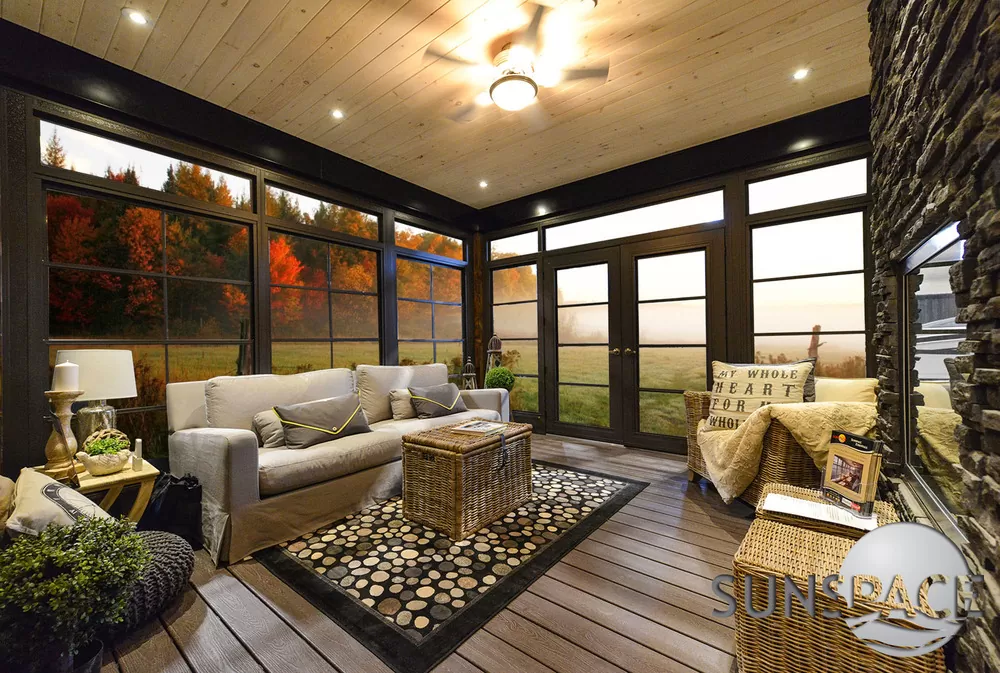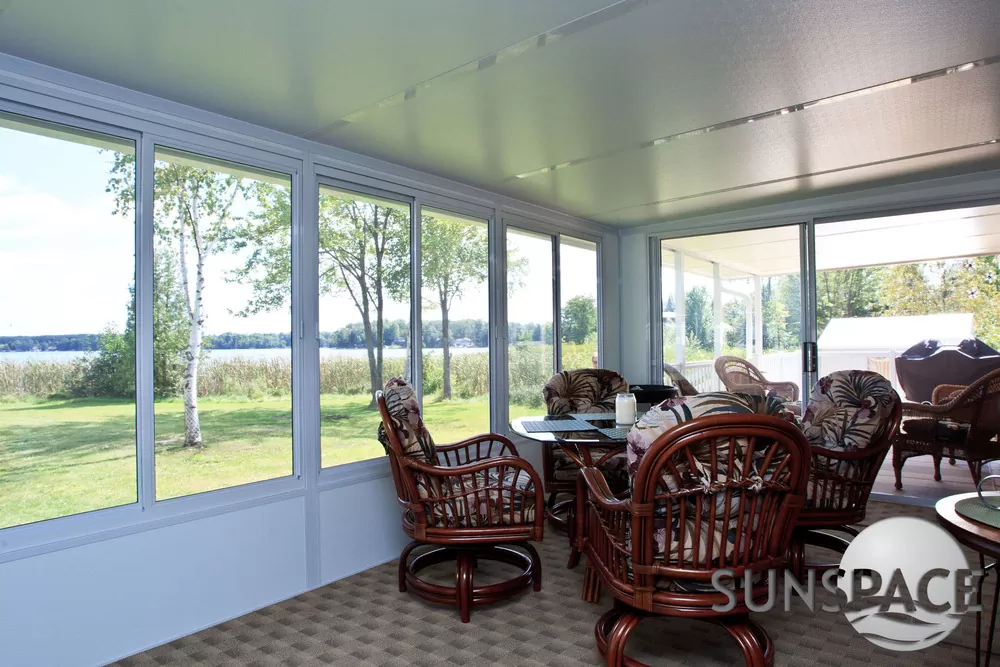
A 3-season sunroom is one of the best additions you can make to a Jersey Shore home. It extends your usable outdoor space, keeps bugs out, and gives you a comfortable place to sit through spring, summer, and most of fall. But it also comes with a real limitation: without insulation or a connection to your home’s HVAC, temperatures inside can swing dramatically. On a hot August afternoon, it can feel like a greenhouse. On a cool October evening, it gets cold fast.
The good news is that you don’t have to accept those extremes. There are practical, cost-effective ways to keep a 3-season room comfortable across more of the year without converting it to a full 4-season sunroom. Whether you’re dealing with summer heat or shoulder-season chill, the right combination of airflow, shading, and supplemental heating makes a noticeable difference.
If you’re not sure whether a 3-season setup is the right call for your home long-term, speaking with a sunroom contractor in Jersey Shore can help you weigh the options before you invest in comfort upgrades.
Why 3-Season Rooms Get So Hot (and Cold)
A 3-season sunroom typically uses single-layer or thin panel walls, uninsulated framing, and screen or polycarbonate panels instead of thermally broken glass. That’s what keeps the cost lower compared to a 4-season build, but it also means the room has almost no thermal mass. It heats up fast when the sun is out and loses warmth quickly when temperatures drop.
On the Jersey Shore, that’s a real daily reality. Summer humidity makes afternoon heat feel worse. Coastal breezes can actually help, but only if your window system lets you control airflow effectively. And in spring or fall, temperatures can shift 20 degrees between morning and early evening.
Understanding why the room behaves this way helps you pick the right solution instead of throwing money at fixes that won’t move the needle.
Keeping a 3-Season Sunroom Cool in Summer
Maximize Ventilation First
The single most effective thing you can do for summer comfort is control airflow. If your sunroom uses a WeatherMaster window system, you have real options here. The horizontal 4-track configuration opens up to 75% of the panel width, and panels can be stacked or positioned to direct breeze across the room rather than just letting air drift in.
This matters more on the Jersey Shore than in other areas. Ocean and bay breezes are reliable during much of the summer, and a well-positioned enclosure can draw that air through naturally when panels are open at opposite ends. The 2-track system offers 50% opening, which is still useful, but if summer cooling is a priority, the 4-track system gives you noticeably better airflow control. You can read more about how WeatherMaster windows perform across seasons to get a clearer picture of how ventilation configurations affect comfort over time.
Add a Ceiling Fan
Ceiling fans don’t lower air temperature, but they make a room feel significantly cooler by increasing air movement against your skin. A ceiling fan rated for damp or wet locations (not just indoor use) is the right choice for a 3-season room that sees humidity and temperature swings. Run it counterclockwise in summer to push air downward and create a wind-chill effect.
Block Heat Before It Enters
Once the sun bakes through your panels, the room gets hot fast and stays that way. Sunshades installed on the interior can help significantly. Think of them like sunglasses for your windows. They’re designed to block a portion of solar heat and glare before it heats the interior surfaces and trapped air. For south- or west-facing sunrooms on the Shore, this kind of interior shading can be the difference between a room you use in the afternoon and one you avoid.
Exterior shading, like an awning or louvered pergola above the sunroom, can reduce incoming solar heat even more effectively because it intercepts sunlight before it reaches the glass.
Use a Portable or Window AC Unit
For days when ventilation and shading aren’t enough, a portable air conditioner or a window AC unit is a practical solution. A 3-season room can’t connect to your home’s central HVAC, but a portable unit gives you on-demand cooling without major installation. Size it for the square footage of your specific room. Undersized units run constantly and still don’t cool effectively.
Keeping a 3-Season Sunroom Warm in the Shoulder Seasons
Infrared Heaters Work Well in Open Spaces
Convection heaters (the kind that warm the air) struggle in a 3-season room because the air leaks out faster than you can heat it. Infrared heaters work differently. They warm people and objects directly, similar to how sunlight feels warm even on a cool day. A wall-mounted or ceiling-mounted infrared heater positioned toward your seating area can make the space genuinely comfortable on a cool October or November evening, even if the air temperature isn’t warm.
Portable Electric Heaters for Occasional Use
If you only need heat occasionally, a portable electric space heater is the lowest-cost option. Look for one with overheat protection and an auto-shutoff. Because 3-season rooms aren’t airtight, you’ll want to direct the heat toward where people are sitting rather than trying to warm the whole space.
Consider a Mini-Split for Year-Round Use
If you find yourself wanting to use the room in late fall or early spring consistently, a ductless mini-split is worth considering. A mini-split provides both heating and cooling from one unit, installs without ductwork, and can be controlled independently from your home’s main system. It’s a bigger investment than a space heater, but if you’re on the fence between a 3-season and 4-season setup, it can extend your usable season significantly without a full conversion. The 3-season vs. 4-season sunroom cost comparison lays out what that difference looks like in real numbers.
Quick Comparison: Comfort Options for 3-Season Sunrooms
| Goal | Best Option | Notes |
| Summer cooling | Maximize ventilation + ceiling fan | Most effective when breezes are available |
| Solar heat reduction | Interior sunshades or exterior awning | Blocks heat before it builds up inside |
| On-demand AC | Portable or window AC unit | Size to square footage |
| Shoulder-season warmth | Infrared heater | Warms people, not just air |
| Occasional heat | Portable electric space heater | Low cost, flexible placement |
| Consistent year-round use | Ductless mini-split | Heating and cooling from one unit |
Frequently Asked Questions
Can you use a regular space heater in a 3-season sunroom?
Yes, but it works best when directed at people rather than trying to heat the whole room. Because 3-season rooms aren’t sealed or insulated, heat escapes quickly. An infrared heater aimed at your seating area is generally more effective for comfort.
Will a ceiling fan help cool a 3-season sunroom?
A ceiling fan won’t lower the air temperature, but it creates a wind-chill effect that makes the room feel noticeably cooler. Pair it with open WeatherMaster panels to maximize airflow on days when outdoor air is moving.
Is it worth adding a mini-split to a 3-season room?
It depends on how much you use the space. If you want to extend the season from early spring through late fall, a mini-split is a practical investment. If you only use the room a few months a year, portable heating and cooling options will get you there at lower cost.
Can sunshades actually reduce heat in a sunroom?
Yes. Interior sunshades block a portion of solar radiation before it heats interior surfaces and air. They’re most effective on south- and west-facing exposures where afternoon sun is direct.
What’s the difference between a 3-season and 4-season sunroom for year-round use?
A 4-season sunroom uses insulated walls, thermally broken frames, and connects to your home’s HVAC system. It stays comfortable in winter without supplemental heat. A 3-season room relies on add-on solutions for seasonal use, which is appropriate for most Shore homeowners who close the space down in December anyway.
Make Your Sunroom Work Harder for You
Getting a 3-season room to a comfortable temperature is mostly about layering the right solutions: good ventilation control, targeted shading, and the right supplemental heating or cooling for the season. None of these require major construction. Most can be added to an existing space with minimal disruption.
If you’re finding that the space still doesn’t perform the way you’d like, it may be a good time to talk through whether a structural upgrade makes sense for your situation. Sunspace of the Jersey Shore works with homeowners across Ocean County to figure out what a space actually needs rather than pushing a one-size-fits-all solution. Reach out to schedule a consultation.