If you’re looking at enclosing a porch, upgrading a screen room, or adding windows to an outdoor living space near the water, you’ve probably come across the WeatherMaster name. But what exactly are these windows, what makes them different from standard options, and do they actually hold up in a coastal environment like the Jersey Shore? Those are fair questions, and we’re going to answer all of them honestly.
As sunroom builders in Jersey Shore with years of experience installing and recommending these systems, we see WeatherMaster windows go into all kinds of projects. Here’s what we know from real installs, not just spec sheets.
Have questions about your specific porch or enclosure project? Reach out to our team for a straightforward conversation about your options.
What Are WeatherMaster Windows
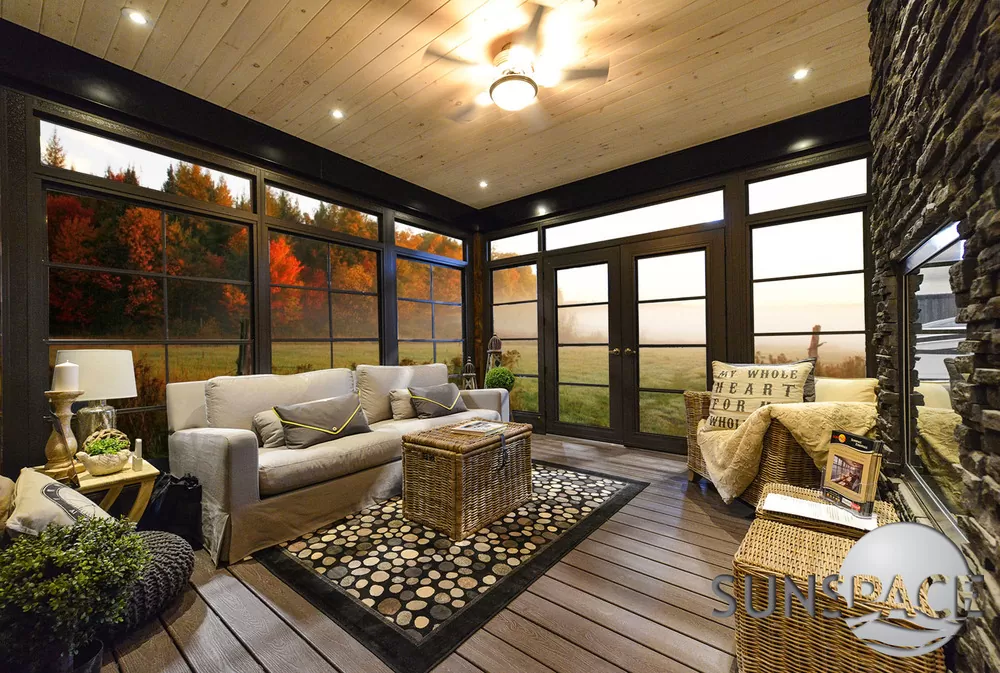
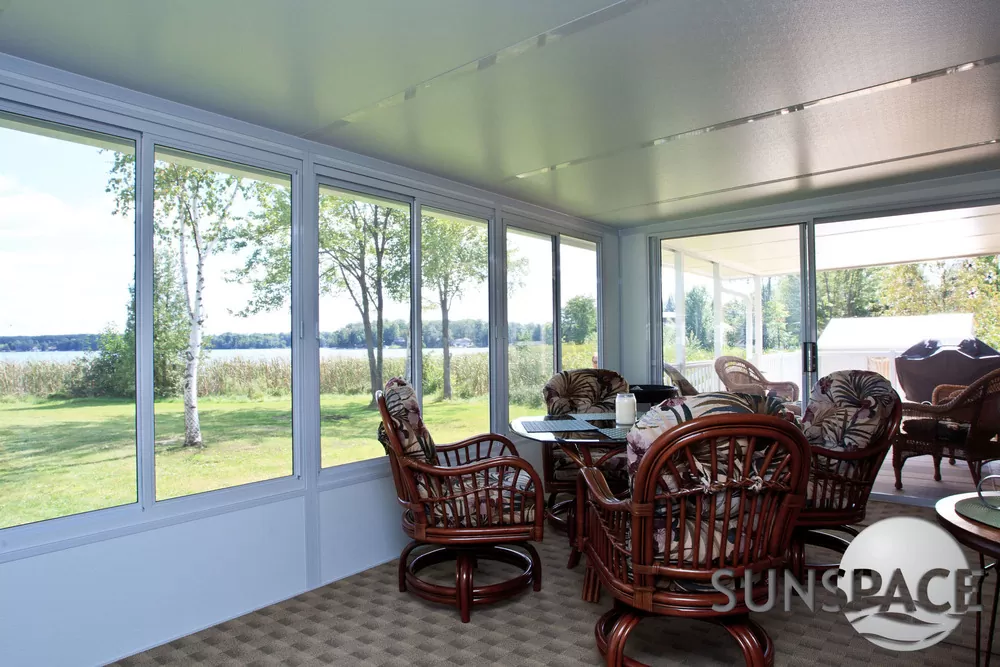
WeatherMaster window system, made by Sunspace, specifically built for porches, screen enclosures, sunrooms, and gazebos. These aren’t standard residential windows you’d put in a bedroom wall. They’re purpose-built for semi-enclosed outdoor spaces where you want the flexibility to open up for a breeze or close down against rain, wind, and cold.
The system comes in two main orientations.
Horizontal sliding windows use a 2-track or 4-track configuration. The panels slide left or right effortlessly, giving you 50% ventilation with the 2-track version and up to 75% with the 4-track. They’re great for porches and gazebos where you want that airy, open feel on calm days but a solid barrier when the weather rolls in.
Vertical sliding windows (the V4-Track system) operate differently. These panels stack up or down rather than sliding side to side. They also provide up to 75% ventilation when fully open. The vertical system works particularly well under existing roof structures and is a popular choice for porch conversions where headroom and framing dictate the install approach.
Both systems are custom-made to fit your openings exactly, which matters a lot when you’re working with an older porch that doesn’t have perfectly standard dimensions.
What Makes WeatherMaster Windows Different from Regular Windows?
A few things stand out once you compare them side by side.
ViewFlex vinyl glazing instead of glass:
This is probably the biggest difference. Standard windows use glass panes. WeatherMaster uses ViewFlex, a flexible vinyl glazing that’s been time-tested for over 40 years. It’s lighter than glass, more impact-resistant, easier to handle, and virtually maintenance-free. It doesn’t shatter the same way glass does, which matters a lot in storm-prone areas.
Extruded aluminum frames:
The frames aren’t lightweight builder-grade aluminum. They’re extruded aluminum construction, which is denser and more dimensionally stable across temperature swings. That stability keeps seals tight over time.
Stainless steel hardware:
This is a detail that often gets overlooked until something rusts. WeatherMaster uses stainless steel hardware throughout. In a coastal setting, that’s not a small thing.
Integrated fiber mesh screen:
The horizontal system includes an outside-mount integrated screen, so you get bug protection without a separate screen system taking up visual space.
Spring-loaded vents:
On the horizontal system, spring-loaded vents lift out easily for cleaning and storage. Simple, but useful for homeowners who want low-hassle maintenance.
Are WeatherMaster Windows Good for Coastal Areas?
The short answer is yes. Here’s why the design choices align well with coastal conditions specifically.
Salt air and corrosion resistance:
Salt air is the enemy of most standard hardware and aluminum finishes. WeatherMaster’s stainless steel hardware is corrosion-resistant by design. The extruded aluminum frames are finished to resist oxidation. And because ViewFlex vinyl doesn’t corrode at all, the glazing itself won’t pit or cloud up the way untreated glass sometimes does near saltwater.
Wind and rain performance:
The horizontal window system is built to reduce wind, rain, pollen, and sound when closed. On the Jersey Shore, you get nor’easters, summer thunderstorms, and fall Atlantic weather that would stress an underpowered window. The multi-track system closes tightly and holds well against those conditions.
UV protection:
The ViewFlex vinyl glazing blocks harmful UV rays, which is relevant year-round at the shore, where sun exposure is more intense. It also helps protect your porch furniture from fading.
Thermal performance:
ViewFlex has better thermal conductivity than single-pane glass. That means your enclosed space retains more warmth on shoulder-season days without the chill cutting through.
Here’s a quick comparison to help you see where WeatherMaster sits.
| Feature | Standard Glass Windows | WeatherMaster Windows |
| Glazing material | Glass | ViewFlex vinyl |
| Impact resistance | Lower | Higher |
| Hardware | Varies | Stainless steel |
| Corrosion resistance | Depends on the finish | Strong |
| Ventilation control | Fixed or limited | 50–75% adjustable |
| Custom sizing | Rarely | Yes, always |
| Warranty | Varies | Manufacturer’s factory warranty |
Where WeatherMaster Windows Work Best
These windows aren’t a fit for every application. They’re specifically built for semi-open outdoor structures, not interior living spaces. The best applications include:
- Porch conversion to a 3-season room
- Existing screen enclosures being upgraded for weather protection
- Gazebos needing wind and rain barriers
- Sunrooms requiring additional ventilation flexibility
If you’re building out a full 4-season sunroom with HVAC, you’d typically use insulated glazing units rather than WeatherMaster panels. But for projects where seasonal flexibility and an outdoor feel matter, WeatherMaster is a strong choice. You can read more about how WeatherMaster windows extend your Shore living season in comfort to see how homeowners are actually using them.
How to Know if They’re Right for Your Project
A few questions worth asking before committing:
- Is your space a porch, screen room, or gazebo rather than an interior room?
- Do you want the option to open fully for a breeze but close tight in bad weather?
- Is corrosion resistance a priority given your proximity to the water?
- Do you want a low-maintenance window that you won’t have to repaint or reseal regularly?
If you answered yes to most of those, WeatherMaster is worth a serious look. If you need fully insulated, climate-controlled glazing for a year-round heated room, that conversation takes a different direction.
FAQ
How long do WeatherMaster windows last?
ViewFlex vinyl glazing has been field-tested for over 40 years. The frames and hardware are built for long-term outdoor exposure, particularly in coastal environments.
Can WeatherMaster windows be installed on an existing porch?
Yes. The system is custom-made to fit your exact openings, so it works well with existing structures, including older porches that don’t have standard dimensions.
Do WeatherMaster windows come in different colors?
The aluminum frames are available in white, driftwood, bronze, black, and gray. The vinyl glazing comes in clear, smoke gray, dark gray, and bronze tints.
Are WeatherMaster windows good in high winds?
When closed, the multi-track systems are built to reduce wind and rain effectively. They’re specifically designed for outdoor enclosures where weather exposure is expected.
Can I install WeatherMaster windows myself?
The system is designed for professional installation to ensure a custom, weather-tight fit. Proper installation is also required to maintain the manufacturer’s warranty.
Talk to Someone Who Installs These Every Day
If you’ve got a porch, screen room, or outdoor enclosure on your Jersey Shore property and you’re wondering whether WeatherMaster windows make sense, the best next step is a simple conversation. Sunspace of the Jersey Shore installs these systems regularly and can tell you quickly whether they’re a good fit for your specific space and goals. Contact us to set up a no-pressure consultation.