You’ve decided a four-season sunroom is worth serious consideration. Maybe you’ve spent too many winters watching a screen room or three-season porch go unused, or you’ve been eyeing that back deck and thinking it could become something more permanent. Either way, before any contractor takes measurements or places an order, there are decisions and planning steps that most homeowners don’t think about until they’re already mid-project.
Toms River sits in Ocean County, and building here comes with its own rules, seasonal patterns, and coastal considerations. As residential sunroom contractors in Jersey Shore who work throughout Ocean County, we walk homeowners through this process regularly. Here’s what you should know before you commit.
Have questions specific to your property? Reach out to our team for a straightforward conversation before you make any decisions.
What Actually Makes a Sunroom “Four-Season”
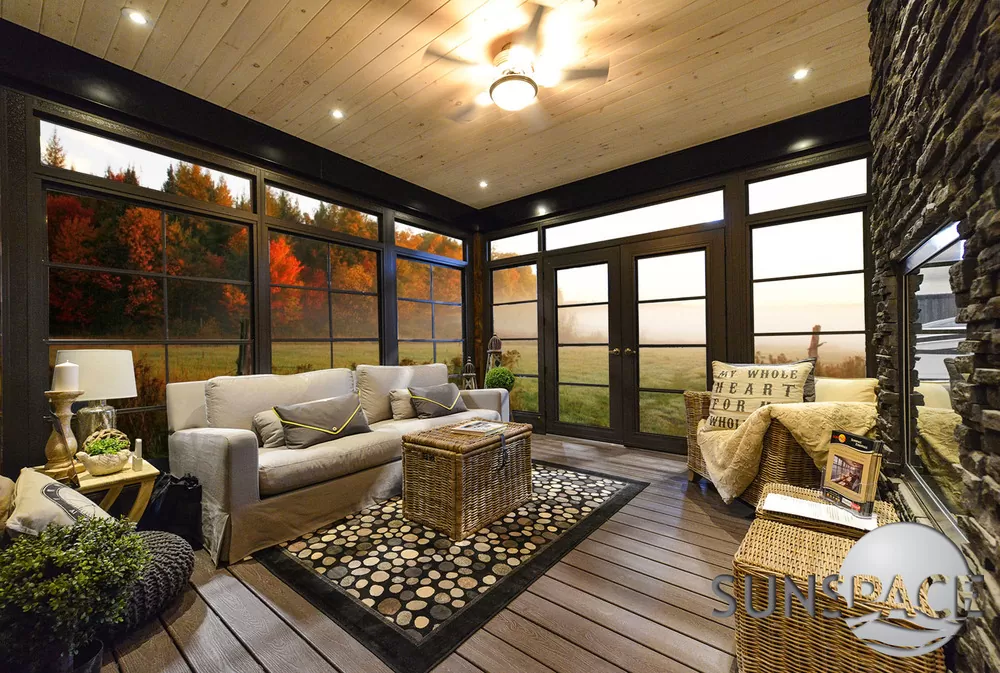
It’s worth being precise about this upfront, because the term gets used loosely. A true four-season sunroom is genuinely comfortable in January just as much as July. That requires a specific construction system built around insulation and climate control, not just a space heater and extra-thick windows.
Here’s what separates a four-season room from a standard three-season build:
- Insulated walls and roof panels with high R-values that hold conditioned air regardless of outdoor temperature
- Double-pane, Low-E glass that blocks UV rays and significantly reduces heat transfer
- Climate control integration, either through your home’s existing HVAC system or a dedicated mini-split unit
- New Jersey building code compliance as a permanent structure, not a seasonal enclosure
- In addition to your home’s livable square footage and appraised value
A three-season room uses thinner materials and isn’t built for winter use. If you want to sit in that room on a January morning with a cup of coffee, a four-season sunroom is the right build. If that’s not a priority, you have less expensive options worth exploring instead.
The Permit Process in Toms River
This is the step that surprises most homeowners. A four-season sunroom is classified as a permanent addition to your home under the New Jersey building code, which means it requires a building permit from Ocean County before a single panel goes up.
Here’s what that process generally involves for Toms River Township projects.
Plan submission: Your contractor submits construction drawings to the local building department. These include structural details, room dimensions, and, for a four-season build, mechanical details related to the HVAC connection or mini-split installation.
Permit review: Ocean County reviews submissions for code compliance. Plan for several weeks in most cases. Projects near the water may trigger additional review under the Coastal Area Facility Review Act (CAFRA), which the New Jersey Department of Environmental Protection administers for properties near Barnegat Bay and other coastal areas.
Construction inspections: New Jersey requires inspections at specific stages, typically including footing, framing, and a final inspection. Each phase needs to pass before the next one proceeds.
Certificate of Occupancy: Once the final inspection clears, you receive a Certificate of Occupancy, which officially classifies the space as a livable room addition and protects you at resale.
A licensed contractor handles permit applications as part of the project. But understanding the process helps you set realistic expectations from the start.
Foundation and Site Conditions: The Overlooked Variable
A four-season sunroom can go on a new foundation or over an existing structure, but not every existing porch, deck, or concrete slab qualifies without modifications. This is one of the most common planning gaps we see, and it’s worth addressing before you get attached to a budget number.
A thorough site assessment will look at three things.
Load capacity: A fully insulated, year-round room is heavier than a screen room or three-season porch. Your existing structure needs to support that additional load. If it doesn’t, new footings are required, and that adds both cost and time before the sunroom system itself goes in.
Attachment to the home: Where the sunroom ties into your home’s exterior affects both waterproofing and structural connection. The attachment method needs to meet the current New Jersey building code, and older homes occasionally have exterior conditions that need addressing first.
Lot conditions. Grading, drainage, and proximity to property lines all factor in. Ocean County has setback requirements that determine how close to your property line a permanent structure can be built.
Getting a site assessment before finalizing your plans prevents cost surprises that show up only after you’ve committed. It also gives you an accurate foundation budget, which general sunroom quotes don’t include.
What a Four-Season Sunroom Costs in Toms River
Cost is usually the first real question, and the honest answer is that it varies more than most online sources suggest. In the Toms River area, most four-season sunroom projects run between $25,000 and $65,000 fully installed. That’s a wide range, and it reflects real differences in scope rather than contractor price variation.
The factors that move the number the most are:
| Factor | Lower End | Higher End |
| Room size | Smaller footprint | Larger addition |
| Glass type | Standard double-pane | Low-E Argon-filled |
| Foundation | Existing qualified slab | New poured concrete footings |
| HVAC approach | Mini-split unit | Full home system extension |
| Electrical scope | Basic lighting and outlets | Full ceiling fans, circuits, heating |
| Interior finish | Standard | Premium flooring, painted walls |
Financing options are worth asking about during your consultation. A detailed, itemized quote before any work begins is the standard you should expect from any contractor you’re considering.
If you want to understand the broader return on investment before committing, this breakdown of whether a sunroom adds value in New Jersey is a useful read at this stage of planning.
What the Installation Timeline Looks Like
Once permits are approved, most four-season sunroom projects in Toms River are completed in two to four weeks on-site. But the full timeline from initial consultation to a finished, inspected room is longer than that, and it’s worth understanding why.
The complete process, from first measurement through Certificate of Occupancy, typically runs 12 to 18 weeks. Here’s how that time is generally distributed:
- Design finalization and custom manufacturing of your sunroom system
- Permit filing and review at the township and county level (CAFRA review adds time if applicable)
- Foundation and site preparation work were needed
- Framing and panel installation
- Electrical, HVAC, and mechanical rough-in
- Interior finishing and final inspection
Manufacturing lead time and permit review are the two phases that vary most. A straightforward permit situation on a well-prepared site moves faster. A CAFRA review or a site that needs significant prep work extends the window. Planning for the full 12 to 18 weeks keeps your expectations accurate without overpromising a completion date.
Questions Worth Answering Before Your Consultation
Walking into a first conversation with clear answers to these questions leads to a more accurate estimate and a faster decision process.
- Do you want to extend your home’s existing HVAC or install a dedicated mini-split for the sunroom?
- Is there an existing structure you want to build on, or are you starting from a bare area?
- What’s your intended primary use for the room (daily living, guest space, home office)?
- Do you have an HOA that requires approval before permit filing?
- What’s your target timeline, and is there a seasonal reason for it?
None of these need to be final decisions before you talk to a contractor. But having thought through each one means you get useful answers from the conversation rather than just more questions.
FAQ
Do I need a permit for a four-season sunroom in Toms River?
Yes. A four-season sunroom is a permanent addition under the New Jersey building code and requires a building permit from Ocean County. Properties near Barnegat Bay may also require a CAFRA permit from the NJDEP.
How is a four-season sunroom different from a three-season room?
A four-season room uses insulated wall and roof panels, double-pane Low-E glass, and connects to a heating and cooling system. A three-season room uses lighter materials and isn’t built to maintain a comfortable temperature through a New Jersey winter.
Can a four-season sunroom be built on an existing porch or deck?
Sometimes, but not always, without modifications. Your existing structure needs to support the additional load of a fully insulated room. A site assessment will determine whether reinforcement or new footings are needed.
What HVAC options work best for a four-season sunroom?
Both mini-split systems and extensions of your home’s existing HVAC can work well. The right choice depends on your home’s current system capacity, the size of the sunroom, and your budget.
Does a four-season sunroom require interior finishing before it’s usable?
The room can be used before the finish flooring and painting are complete, but the Certificate of Occupancy requires final inspection approval. Most homeowners choose to complete interior finishing as part of the original project.
Plan It Right Before You Build
The homeowners who have the smoothest projects are the ones who understand the full picture before they sign anything. Permits, site conditions, HVAC planning, and realistic timelines all affect how your project unfolds, and none of them are complicated once you know what to ask. Sunspace of the Jersey Shore works with Toms River and Ocean County homeowners from initial site assessment through final inspection. Contact us to schedule a consultation and get clear answers about your specific property and goals.