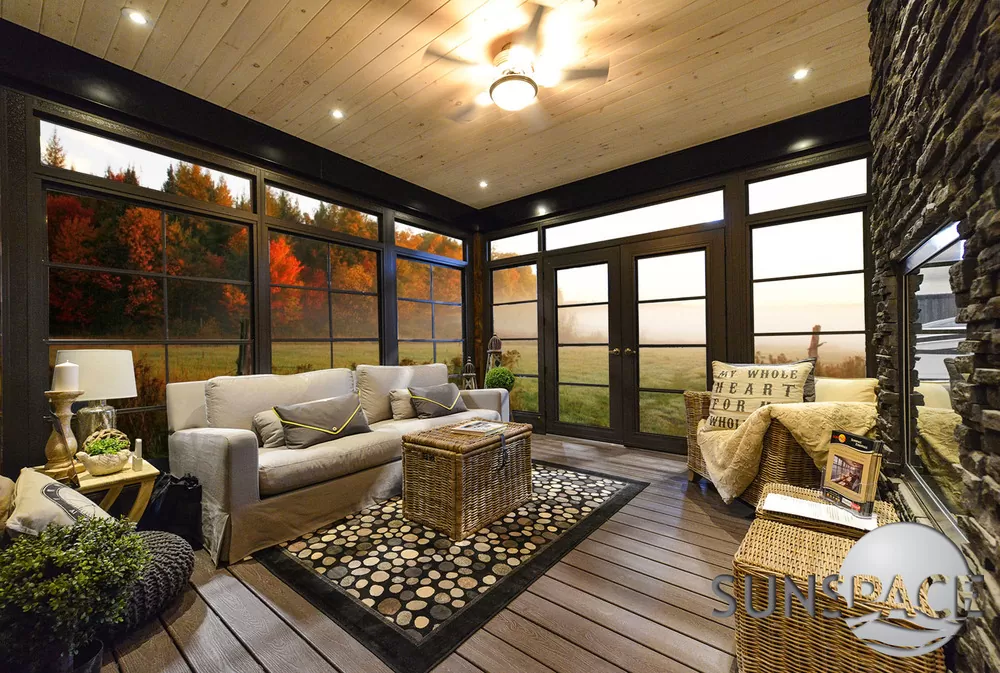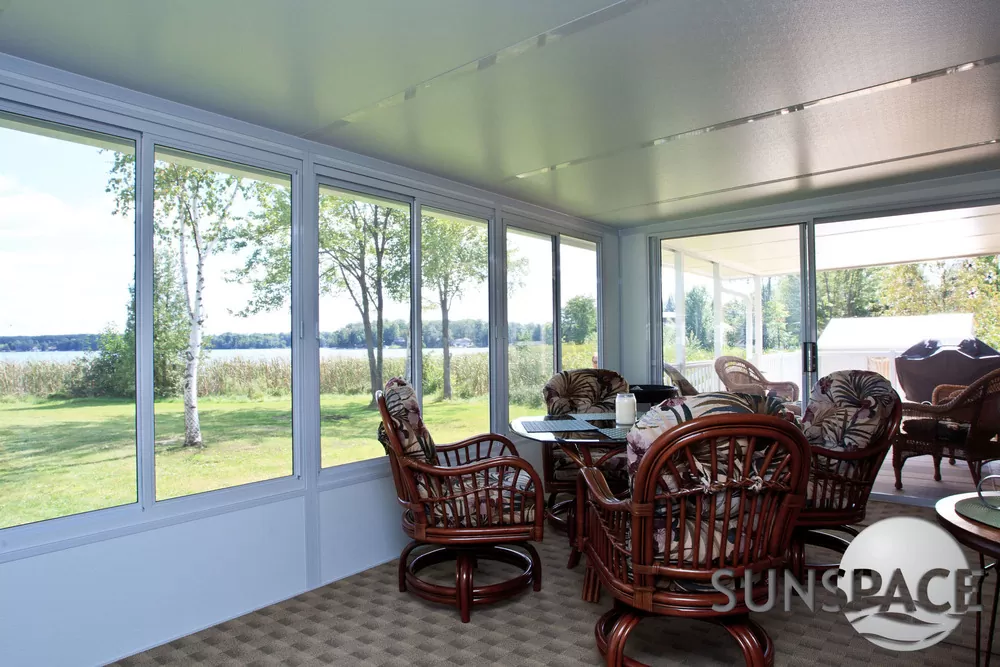
If you’re building or upgrading a sunroom or porch enclosure on the Jersey Shore, the window question comes up fast. You’ve probably seen traditional vinyl replacement windows everywhere, and they’re easy to find. Then there’s WeatherMaster, a purpose-built system that shows up specifically in sunroom and outdoor enclosure projects. So what’s actually different between them, and does it matter for your specific project?
The honest answer is that these two products are built for fundamentally different purposes. Choosing one over the other isn’t really about brand preference. It’s about matching the right system to what your space actually needs. As sunroom builders in Jersey Shore who work with WeatherMaster systems regularly, we can walk you through exactly where the two differ and where each one makes sense.
Not sure which window system fits your enclosure project? Contact our team, and we’ll give you a straight answer based on your specific space.
What Each System Is Actually Built to Do
This is the most important thing to understand before comparing anything else.
Traditional vinyl windows are designed for fully enclosed, climate-controlled interior spaces. They’re built to be installed in a framed wall, sealed permanently, and left in place. Ventilation is limited, typically to whatever the sash configuration allows. They assume the space on both sides of the glass is relatively controlled.
WeatherMaster windows are engineered specifically for semi-open outdoor structures: porches, screen enclosures, sunrooms, and gazebos. They’re built to go from fully open to fully closed depending on conditions, and to handle direct weather exposure on one face while protecting the interior space on the other. That’s a different engineering problem entirely.
Once you see them as tools built for different jobs, the rest of the comparison makes a lot more sense.
Glazing: ViewFlex Vinyl vs. Sealed Glass Panes
Traditional vinyl windows use vinyl frames with sealed glass panes. That’s the standard for interior rooms, and it works fine in that context. But sealed glass units have limitations in outdoor-adjacent applications.
WeatherMaster uses ViewFlex vinyl glazing instead of glass panes, set within extruded aluminum frames. Sunspace describes ViewFlex as tougher and more durable than glass, and it offers several specific advantages in a porch or sunroom context:
- Impact resistance. ViewFlex is more impact-resistant than sealed glass panes. On the Jersey Shore, where Atlantic storms can drive debris, that matters.
- Weight. ViewFlex panels are significantly lighter than sealed glass panes of comparable size. That reduces structural load on the enclosure frame.
- Flexibility. Because WeatherMaster panels slide, stack, and move regularly, the glazing material needs to handle repeated movement without stress fractures. Sealed glass units aren’t designed for that kind of repeated flexing.
- UV stability. ViewFlex is available in four tints: clear, smoke gray, dark gray, and bronze, giving you control over light and heat without compromising durability.
Sealed glass panes in a traditional vinyl-framed window hold up well in a fixed-wall interior application. They’re simply not designed for the sliding, stacking, and repeated weather exposure of an active porch enclosure.
Ventilation Control: Fixed vs. Flexible
This is one of the clearest practical differences, and it shows up immediately in daily use.
Traditional vinyl windows offer limited ventilation options. Single or double hung, casement, or slider configurations let you open a portion of the window. But the maximum ventilation area is constrained by the design, and the windows aren’t built to be stored open or stacked out of the way.
WeatherMaster offers genuine ventilation flexibility:
- The Horizontal 2-Track system opens to provide 50% ventilation, with panels sliding left or right effortlessly
- The Horizontal 4-Track system opens to 75% ventilation
- The Vertical 4-Track system stacks panels up or down, also providing up to 75% ventilation
- Panels lift out easily for cleaning and storage when you want a completely open-air experience
- An integrated fiber mesh screen on the horizontal system provides bug protection without a separate screen unit
For a porch or sunroom where the whole point is connecting to the outdoors when conditions allow, that range of control is genuinely useful. A traditional vinyl window simply can’t replicate it.
Hardware and Frame: Salt Air Matters Here
For Jersey Shore properties specifically, the hardware question deserves its own section.
Traditional vinyl window hardware varies considerably by manufacturer. Many standard options use zinc or basic aluminum hardware that holds up fine in a typical suburban interior environment. Near the water, though, salt air accelerates corrosion on exposed hardware faster than most homeowners expect.
WeatherMaster uses stainless steel hardware throughout. Stainless steel is corrosion-resistant by design, which makes it a better long-term choice for coastal applications where the windows are regularly exposed to salt-laden air. The frames are constructed of extruded aluminum, which is denser and more dimensionally stable than roll-formed alternatives and holds up better in the expansion and contraction cycles that come with coastal temperature swings.
This isn’t a minor detail. Hardware failure is one of the most common reasons windows need replacement ahead of schedule in coastal environments.
Side-by-Side Comparison
| Feature | Traditional Vinyl Windows | WeatherMaster Windows |
| Primary application | Interior enclosed rooms | Porches, sunrooms, outdoor enclosures |
| Frame material | Vinyl | Extruded aluminum |
| Glazing material | Sealed glass panes (vinyl-framed) | ViewFlex vinyl panels |
| Impact resistance | Standard | Higher |
| Maximum ventilation | Limited by sash design | Up to 75% open |
| Panel removal | No | Yes |
| Hardware material | Varies | Stainless steel |
| Integrated screen | No | Yes (horizontal system) |
| Custom sizing | Sometimes | Always |
| Salt air suitability | Depends on spec | Strong |
| Warranty | Varies | Manufacturer factory warranty |
When Traditional Vinyl Windows Are the Right Call
WeatherMaster isn’t the right answer for every project, and it’s worth being honest about that.
If you’re building a fully enclosed, climate-controlled four-season sunroom with insulated walls and an HVAC system, traditional sealed glazing units are often the better fit. A four-season room is essentially an interior space, and it needs the thermal performance of insulated glass units rather than the flexible ventilation of a WeatherMaster panel system.
The Sunspace Model 400, for example, uses high-efficiency Low-E Argon gas glass rather than WeatherMaster panels, because that level of insulation is what a year-round heated and cooled room actually requires. WeatherMaster is purpose-built for the space between fully open and fully enclosed.
So the decision isn’t WeatherMaster versus traditional vinyl in the abstract. It’s: what kind of space are you actually building, and which system is engineered to perform well in it?
Which One Fits Your Jersey Shore Project?
Here’s a quick way to think through it.
WeatherMaster is likely the better fit if:
- You’re enclosing an existing porch, screen room, or gazebo
- You want flexible ventilation control across seasons
- Your space is semi-open or exposed to direct weather on at least one face
- Salt air and coastal storm exposure are real factors for your property
- You want a virtually maintenance-free system with stainless hardware
Traditional sealed glazing is likely the better fit if:
- You’re building a fully insulated, heated, and cooled four-season room
- The space will function as an interior room addition year-round
- Maximum thermal performance is a higher priority than ventilation flexibility
If you’re still not sure which category your project falls into, that’s a useful thing to work out in a consultation before you commit to a window system. As Toms River homeowners who’ve explored WeatherMaster windows know, the right system makes a real difference in how much you actually use the space across the year.
FAQ
Can WeatherMaster windows be used in a fully enclosed four-season sunroom?
Generally, no. WeatherMaster is built for semi-open seasonal enclosures. Four-season rooms require insulated glass units that hold conditioned air and meet thermal performance standards for year-round heating and cooling.
Are WeatherMaster windows more expensive than standard vinyl windows?
WeatherMaster is a specialty system, so it typically costs more than builder-grade vinyl windows. But it’s not a fair comparison because the products serve different purposes. The relevant comparison is WeatherMaster versus other porch enclosure window systems, not standard residential replacement windows.
How durable are WeatherMaster windows in a coastal environment?
ViewFlex vinyl glazing is described by Sunspace as tougher and more durable than glass. Stainless steel hardware and extruded aluminum frames are both suited for long-term outdoor and coastal exposure, and the system is virtually maintenance-free.
Can traditional vinyl windows handle the ventilation demands of a porch enclosure?
They can provide some ventilation, but not the full open-air flexibility that WeatherMaster systems offer. Standard vinyl windows aren’t designed to be stacked, stored, or removed the way WeatherMaster panels can be.
Do WeatherMaster windows come in custom sizes?
Yes. Every WeatherMaster unit is custom-made to fit your specific openings, which is particularly useful when working with older porches that don’t have standard dimensions.
Get the Right Window for Your Specific Space
Choosing a window system for a porch or sunroom is easier once you’re clear on what kind of space you’re actually building. Sunspace of the Jersey Shore works with homeowners across Ocean County to match the right system to each project. Reach out to schedule a consultation and get clear, honest guidance on what makes sense for your home.