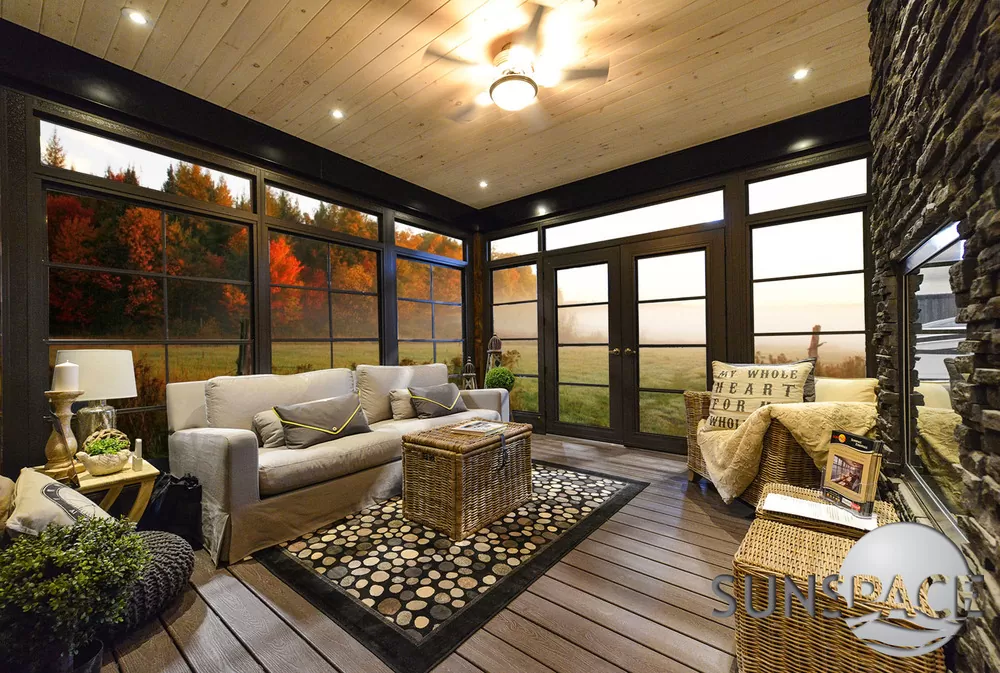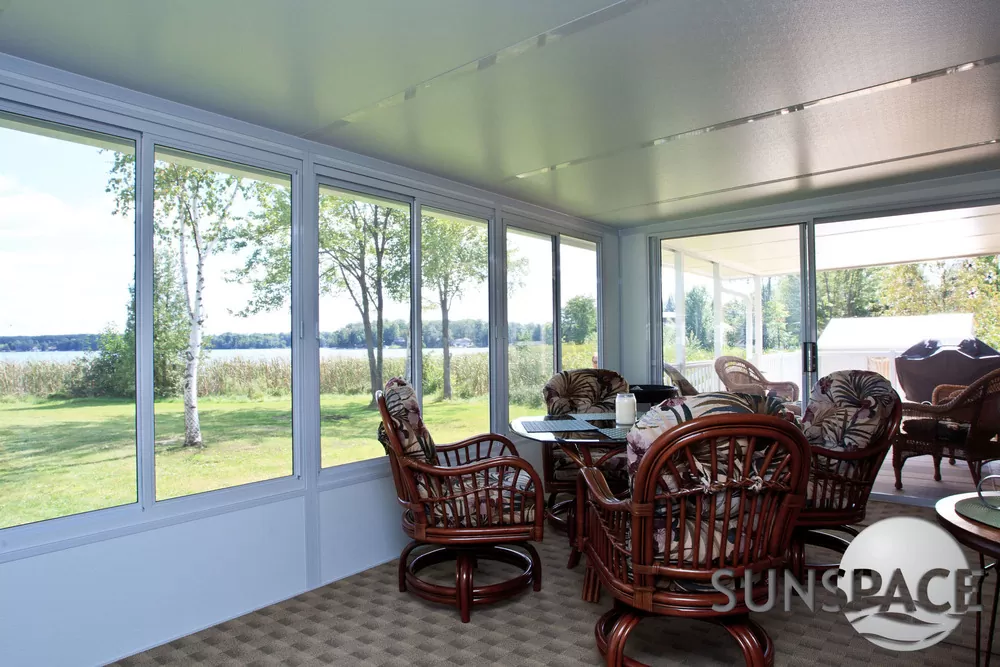
If you’ve already decided on WeatherMaster windows for your porch or sunroom enclosure, you’ve likely hit the next question pretty quickly: 2-track or 4-track? It’s not just a spec difference. The two configurations actually perform differently in daily use, and the right choice depends on how you plan to use the space and what conditions you’re dealing with.
The 4-track system is the more capable configuration, but that doesn’t automatically make it the right one for every project. As porch and sunroom services providers in Jersey Shore who install both systems regularly, we can walk you through exactly what the 4-track does well and where it has trade-offs worth knowing about.
Trying to decide which WeatherMaster configuration fits your project? Reach out to our team for an honest recommendation based on your specific space.
What the 4-Track System Actually Is
Before getting into pros and cons, it helps to understand what the 4-track configuration is doing differently from its 2-track counterpart.
The WeatherMaster Horizontal Window System comes in three track options: H2T (2-track), H3T (3-track), and H4T (4-track). Each configuration refers to how many tracks the panels slide along. More tracks mean more panels fitting within the same opening width, which directly affects how much of the opening you can uncover.
The H4T horizontal 4-track system accommodates panels up to 192″ wide x 108″ high. Because panels stack and nest behind one another when open, the 4-track system allows up to 75% of the total opening to be uncovered when panels are fully slid to one side. The 2-track version maxes out at 50% ventilation.
That 25% difference sounds modest. In practice, for a large porch on the Jersey Shore on a calm summer evening, it’s a meaningful distinction.
The Pros of WeatherMaster 4-Track Windows
Maximum Ventilation for Coastal Living
The biggest practical advantage of the 4-track system is ventilation. At 75% open, you’re getting close to a fully open-air experience while still having the frame and glazing in place. For Shore homeowners who want to catch ocean breezes without fully removing enclosures or leaving the space unprotected, that range of control is genuinely useful.
On a still, hot summer afternoon, you’ll notice the difference between 50% and 75% open fairly quickly. More panel width uncovered means more air movement through the space.
Covers Larger Openings in a Single Unit
The 4-track system accommodates openings up to 192″ wide in a single unit. That’s 16 feet of opening without a center post or structural break. For homeowners with wide porch bays or large open-concept enclosures, this matters. The 2-track system tops out at 108″ wide per unit, so wide openings on a 2-track build require multiple units and the framing breaks that come with them.
If you have a wide, unobstructed porch view you want to preserve, the 4-track system lets you do that more cleanly.
Flexible Panel Stacking
With four tracks, panels can be distributed and stacked in configurations the 2-track system can’t replicate. You can push all panels to one side for a fully open corner, split them to leave a center gap, or position them to direct airflow in a specific part of the room. That flexibility makes the 4-track system genuinely more adaptable to how people actually use a porch space across different weather conditions.
Better Storm Closure Coverage
When the panels are closed, the 4-track system uses more overlapping panel layers across the same opening. That means better layering against wind-driven rain and sound reduction. On the Jersey Shore, where nor’easters and summer line storms can hit quickly, closing a porch fast and knowing it’s well-covered matters.
Same Core Construction Quality
Everything that makes WeatherMaster reliable in a coastal environment carries over to the 4-track system: extruded aluminum frames, stainless steel hardware, ViewFlex vinyl glazing that Sunspace describes as tougher and more durable than glass. The 4-track isn’t a premium version with upgraded materials. It’s the same system with a different track configuration.
The Cons of WeatherMaster 4-Track Windows
Higher Upfront Cost
More tracks, more panels, and a wider-capable frame mean higher material costs than the 2-track system. For homeowners on a tighter project budget, the 2-track system delivers solid WeatherMaster performance at a lower cost per unit. If 50% ventilation is sufficient for your space and usage patterns, the 4-track upgrade may not justify the additional spend.
More Panel Weight to Manage
More panels mean more total glazing weight in the opening. Individual panels are designed to slide effortlessly, but when you’re fully opening or closing a 192″-wide unit with multiple panels, there’s more physical work involved than with a smaller 2-track setup. For most users, this isn’t a daily issue, but it’s worth factoring in if the primary user has mobility considerations.
Stacked Panels Reduce Some Sightlines When Open
When all panels are pushed to one side and stacked, that corner of the opening has a thick column of nested glazing panels. On a 2-track system with fewer panels, the stacked column is thinner. For homeowners with a specific view they want unobstructed from every angle, this is worth considering in the design phase. Panel placement planning during the consultation stage can usually address this, but it doesn’t disappear entirely.
Overkill for Smaller Openings
For a standard porch bay under 10 feet wide, the 4-track system’s capacity advantages don’t come into play in a meaningful way. A well-configured 2-track setup handles those openings efficiently and at lower cost. The 4-track system earns its value at wider opening dimensions where the 2-track can’t cover the span in one unit or can’t achieve adequate ventilation without multiple units.
4-Track vs. 2-Track: A Direct Comparison
| Feature | H2T (2-Track) | H4T (4-Track) |
| Max ventilation | 50% | 75% |
| Max width per unit | 108″ | 192″ |
| Panel count per unit | 2 panels | 4 panels |
| Stacked panel column width | Narrower | Wider |
| Cost | Lower | Higher |
| Best for | Standard porch bays | Wide openings, max ventilation |
| Storm closure coverage | Good | Better |
| Glazing and hardware quality | Same | Same |
Which Openings Actually Benefit from the 4-Track System
The 4-track system earns its value in specific situations. It’s genuinely the better configuration when:
- Your porch opening exceeds 108″ wide, and you want a single uninterrupted unit
- Maximum ventilation is a priority because the space runs warm or faces prevailing winds
- You want the flexibility to fully open large bay sections independently
- Your enclosure faces south or west and captures intense afternoon sun, making airflow more important to comfort
For narrower openings or projects where ventilation is secondary to weather protection, the 2-track system covers the job well at a better cost point. Understanding how WeatherMaster windows perform across seasons can also help you think through which configuration matches how you actually plan to use the space through spring, summer, and fall.
FAQ
What is the maximum opening width for a WeatherMaster 4-track unit?
The H4T system accommodates openings up to 192″ wide by 108″ high per unit. That’s one continuous unit spanning up to 16 feet without a center structural break.
Does the 4-track system provide more weather protection than the 2-track when closed?
Both systems are designed to reduce wind, rain, pollen, and sound. The 4-track system has more panel layers overlapping across the same opening width, which adds slightly more coverage depth when closed.
Is the 4-track WeatherMaster system harder to maintain than the 2-track?
Not meaningfully so. Both use the same vents that lift out easily for cleaning and storage. The 4-track has more panels to remove and store if that’s part of your maintenance routine, but the per-panel process is identical.
Can WeatherMaster 4-track windows be installed on an existing porch?
Yes. Both track configurations are custom-manufactured to fit your existing openings exactly. The 4-track system installs in the same way as the 2-track and works with existing structural framing.
Is the 4-track system always worth the extra cost over the 2-track?
For wide openings and homeowners who prioritize maximum ventilation, yes. For standard porch bays under about 10 feet wide where 50% ventilation is sufficient, the 2-track system is typically the more practical choice.
Get the Right Configuration for Your Porch
The difference between the 2-track and 4-track system comes down to your opening dimensions, how much airflow you want, and your budget. Neither is universally better. The right choice depends on your specific porch and how you use it. Sunspace of the Jersey Shore installs both configurations throughout Ocean County and can walk you through which one makes sense for your space. Contact us to schedule a site visit and get a straight answer.