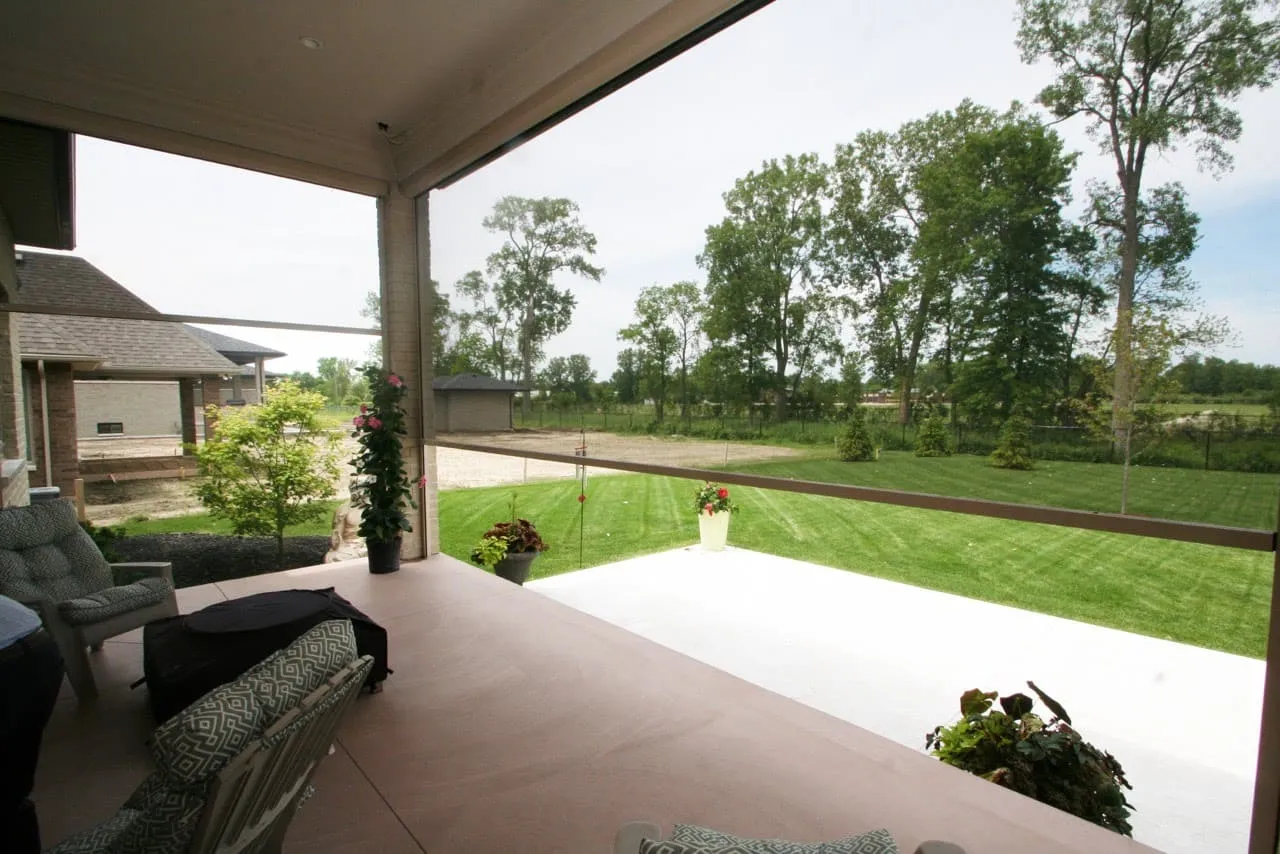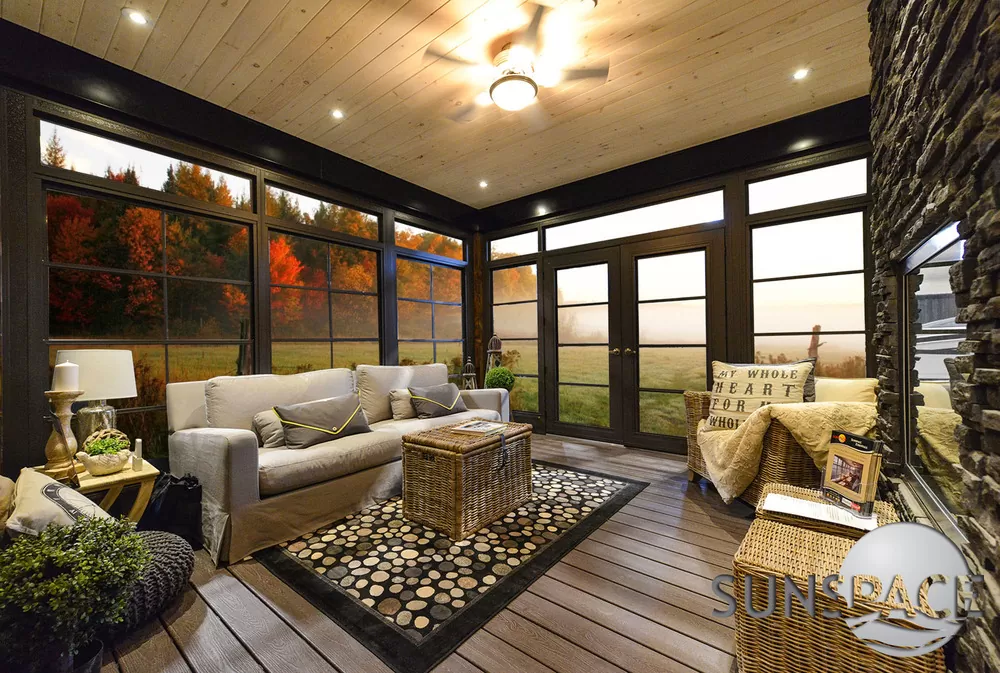
If you’ve got a patio, deck, or porch on the Jersey Shore, you already know the problem. The space looks great when you’re not using it and becomes uncomfortable the moment you actually sit down. Sun drives glare across the table in the afternoon. Bugs show up at dusk. A bay breeze that felt refreshing in June turns into a wind tunnel by September. The standard options, either close the space in permanently or leave it exposed, both feel like a compromise.
Motorized retractable screens are a third option that most homeowners don’t think about until they see one working. The screen extends when you need it, retracts completely out of sight when you don’t, and the whole thing runs on a remote or a voice command. It’s a comfort upgrade that works with your outdoor space instead of changing what it is.
This guide covers everything Jersey Shore homeowners need to know: how the system works, which fabric fits which situation, what smart home integration actually looks like, and how to figure out whether this is the right call for your specific space. If you want to talk through your specific setup before reading further, reaching out to a Sunroom Builder in Jersey Shore can help you get a straight answer based on your actual patio or deck layout.
How a Motorized Retractable Screen System Works
The concept is simple. A screen fabric rolls onto a housing unit mounted at the top of the opening. When you extend the screen, it drops down along a guided track system on each side, keeping it taut and stable even when wind picks up. When you retract it, it rolls back into the housing and disappears from view completely.
The guided track is what separates a quality retractable screen from a basic roller shade. Without tracks, screen fabric billows, gaps at the sides, and provides unreliable protection from insects and wind. A track-guided system holds the screen flat across the full width of the opening and seals the edges so there’s no gap for bugs or weather to sneak through.
Motorized versions use Somfy motors, which are the industry standard for motorized shade and screen systems. The motor handles all the mechanical work, and you control it through a handheld remote, a wall-mounted switch, a smartphone app, or a voice assistant. Manual versions use the same track system but are operated by hand, which is a practical option for smaller openings or tighter budgets.
Why Jersey Shore Conditions Make This Worth Considering
The Jersey Shore isn’t a typical suburban backyard environment. Salt air, afternoon heat from south- and west-facing exposures, humidity that stays high well into fall, and the sudden line storms that can roll in off the water all affect how outdoor spaces perform.
A few specific reasons this system fits the Shore well:
- Sun exposure: Patios and decks on the Shore often face south or west, which means intense afternoon sun for six months of the year. The screen fabric reflects up to 90% of solar radiation and can lower outdoor temperatures by as much as 11°C (about 20°F) when extended.
- UV protection: The screen filters up to 90% of UV rays, which matters for both comfort and the longevity of outdoor furniture and flooring that sees direct sun.
- Insects: Anyone who’s tried to eat dinner on a Shore deck in July knows the problem. A retractable screen with a guided track seals the opening properly rather than leaving gaps at the edges.
- Wind: Coastal wind is a real comfort issue, not just an annoyance. The right fabric choice makes a measurable difference.
- Flexibility: Because the screen retracts fully when not needed, you don’t give up the open-air feel on days when conditions are perfect. It’s protection on demand, not a permanent enclosure.
Fabric Options and What Each One Does
This is where most homeowners spend the most time, and it’s worth getting right. The fabric you choose determines how the screen performs across sun, wind, privacy, and durability. Here’s what the Sunspace system offers:
TuffScreen
Built for durability and pet resistance. If you have dogs or cats that spend time on the patio, TuffScreen is the practical choice. It handles daily wear and scratch resistance better than other fabrics. UV block and wind control are medium, so it’s not the strongest performer for sun or weather, but the durability trade-off is worth it for households with pets. Available in No-See-Ums Black and Black colorways.
SunTex 90/95
The most versatile option for Jersey Shore conditions. High UV block, high durability, high wind control, and high pet resistance make this a strong all-around performer for sunny, exposed patios and decks. Privacy is medium rather than high, so you can still see in and out through the fabric. Available in a wide range of colorways including Beige, Black, Brown, Dark Bronze, Gray, Stucco (SunTex 90) and Alpaca, Carbon, Chestnut, Mocha, Sand, White, and White/Grey (SunTex 95).
Sheerweave
The right choice when privacy is the priority without losing natural light. Sheerweave delivers high UV block and high privacy while maintaining a softer, more diffused light quality inside the screened area. Wind control and pet resistance are medium. Well suited to spaces close to neighboring properties or shared areas where you want to create a more private feel without closing the space down.
Soltis 502
Built for maximum wind resistance and durability. Very high ratings in both categories, with high UV block as well. Privacy is medium and pet resistance is low, so it’s not the best fit for households with pets. But for a patio or deck that faces prevailing coastal winds or takes direct exposure during nor’easters, Soltis 502 is the strongest performing fabric in the lineup. Available in Solid Black, Solid Silver, Solid Beige, Solid White, and Solid Brown.
PanoramaFR
A clear fabric option for openings where visibility is the priority. Provides a barrier against wind and insects while maintaining a fully transparent view. Available in Clear only.
H2: Fabric Comparison at a Glance
| Fabric | UV Block | Privacy | Durability | Wind Control | Pet Resistance |
| TuffScreen | Medium | Low | High | Medium | High |
| SunTex 90/95 | High | Medium | High | High | High |
| Sheerweave | High | High | High | Medium | Medium |
| Soltis 502 | High | Medium | Very High | Very High | Low |
Smart Home Integration and Control Options
One of the more practical aspects of a motorized screen system is how it fits into the way people actually use their outdoor spaces. You’re not going to walk outside, manually roll down a screen, go back in to get drinks, and come back out. The screen needs to be easy enough to operate that you’ll actually use it.
The Sunspace motorized system is compatible with Amazon Alexa and Google Home, which means you can extend or retract the screens with a voice command from inside or outside the house. Wall-mounted switches work well for spaces with a permanent setup where guests might need to operate the screen. The handheld remote is the most flexible option day-to-day.
Smartphone app control is particularly useful for scheduling. If your patio gets intense afternoon sun starting around 2 PM every day, you can automate the screen to extend at 1:45 and retract at sunset without thinking about it. For homeowners who want the comfort benefit without the daily management, that kind of automation is genuinely useful.
Sizing and Where These Screens Can Be Installed
The system accommodates openings from 24 inches wide up to 276 inches wide (that’s 23 feet), and up to 168 inches tall. That range covers virtually every residential patio, deck, porch, or outdoor kitchen opening you’ll find on the Jersey Shore, including wide bay openings that would otherwise need multiple separate units.
Common installation locations include:
- Open patios without an existing enclosure
- Covered porches and screened porch structures
- Deck openings along railings or between posts
- Outdoor kitchens and cooking areas
- Pergolas and louvered structures
The system works under existing patio covers, alongside sunroom structures, and in combination with railing systems. Because it mounts at the top of the opening and uses a guided track at the sides, it doesn’t require a permanent structural change to the space. It can also be planned alongside a screen room installation if you’re considering a more complete enclosure at some point, since the two systems address overlapping but distinct comfort scenarios.
Frame Colors and How the System Fits Existing Spaces
Five standard aluminum frame colors are available: White, Driftwood, Bronze, Black, and Silver. These are designed to coordinate with existing railings, exterior trim, sunroom framing, and deck hardware rather than standing out as an add-on. For most Jersey Shore homes with white or neutral exterior palettes, the White and Silver options blend well. Bronze and Black work naturally with darker railing systems or modern exterior finishes.
Because the screen fabric and frame are custom-sized to your opening, there’s no visible gap or trim piece covering an off-the-shelf fit. The system is sized to the opening exactly, which matters for both aesthetics and performance.
Motorized vs. Manual: Which Makes More Sense
Both configurations use the same guided track system and the same fabric options. The difference is purely in the operation mechanism.
Motorized makes sense when:
- The screen will be used frequently (daily or near-daily during peak season)
- The opening is wide enough that manually rolling a screen would be awkward
- Smart home integration or scheduling automation is appealing
- Multiple screens are being installed across several openings
Manual makes sense when:
- The opening is smaller and screen operation is occasional
- Budget is a primary consideration
- The space doesn’t have convenient electrical access for the motor
For most Jersey Shore homeowners with larger deck or patio openings who plan to use the space regularly, motorized is the more practical choice in the long run. The daily convenience factor is significant when conditions change quickly, which they often do on the Shore.
What to Think About Before Getting a Quote
Before a consultation, it helps to have a few things figured out:
Sun exposure: Which direction does your patio or deck face? South and west exposures need stronger UV and heat control. North-facing spaces rarely need much sun management at all.
Primary problem: Is your main issue heat, insects, wind, privacy, or a combination? The fabric choice follows directly from this answer.
Opening dimensions: Rough measurements of width and height help narrow options quickly, especially for wide openings.
Control preference: Do you want smart home integration, or is a wall switch sufficient?
Budget range: Manual vs. motorized, and the fabric type, both affect the final cost. Having a rough range in mind helps focus the conversation.
Frequently Asked Questions
Do motorized retractable screens actually keep insects out?
Yes, when properly installed with a guided track system. The track seals the sides of the screen against the framing, which closes the gaps that bugs use to get around a basic roller shade. It’s not an airtight seal, but it’s effective for mosquitoes, flies, and most other common nuisances.
Can a retractable screen handle Jersey Shore wind?
It depends on the fabric and how the system is sized. SunTex 90/95 and Soltis 502 are the strongest performers for wind control. The guided track system helps the fabric hold its position in moderate wind better than an unguided screen. For spaces with consistently strong exposure, Soltis 502 is the fabric designed for exactly that condition.
Will the screen look obvious when it’s retracted?
No. The screen rolls fully into the housing unit at the top of the opening. What you see when it’s retracted is the housing, which is finished in the frame color you choose. Most people describe the retracted position as looking intentional rather than like something tucked away.
Can I install motorized screens on a covered porch I already have?
In most cases, yes. The system mounts at the top of the opening and tracks down the sides, which works with most existing structural framing. Openings from 24 inches to 276 inches wide are accommodated, which covers the majority of residential covered porch configurations.
Is the system low maintenance?
The Sunspace system uses tear-resistant screen fabric and rust-proof aluminum and stainless steel construction, backed by a manufacturer warranty. The main maintenance tasks are occasional cleaning of the fabric and clearing any debris from the track channels. Coastal environments add salt air exposure, but the aluminum and stainless steel components are appropriate for that condition.
Can motorized screens be integrated into a broader outdoor living project?
Yes, and that’s often how they work best. Screens can be planned alongside deck installation, railing systems, patio covers, or a louvered pergola as part of a cohesive outdoor upgrade rather than as a standalone add-on.
Is a Motorized Retractable Screen the Right Fit for Your Space?
A motorized retractable screen is a good fit when you want to keep using your outdoor space as an outdoor space, just with more control over sun, bugs, and wind on any given day. It’s not a permanent enclosure, and it’s not a sunroom. It’s a comfort upgrade that preserves the open-air character of a patio or deck while making it usable for more of the year and more of the day.
For Jersey Shore homeowners who’ve been accepting that their deck is off-limits by 2 PM in summer or that dinner outside ends when the bugs arrive, it’s a practical fix that doesn’t require a structural commitment.
Sunspace of the Jersey Shore installs motorized and manual retractable screen systems throughout Ocean County. Reach out to schedule a free consultation and get a recommendation based on your specific space, exposure, and priorities.