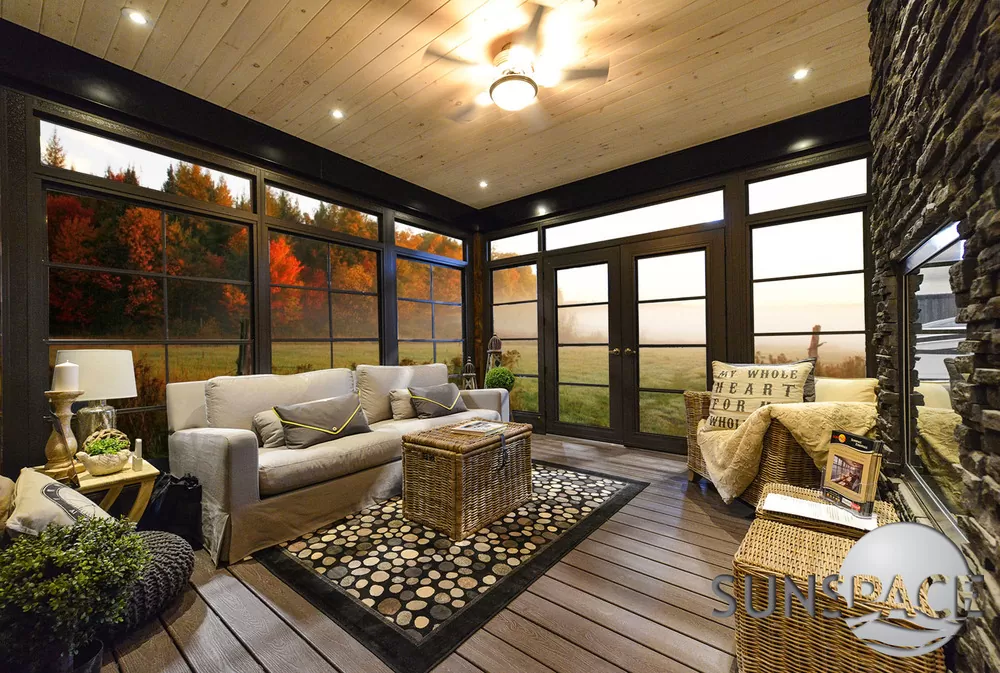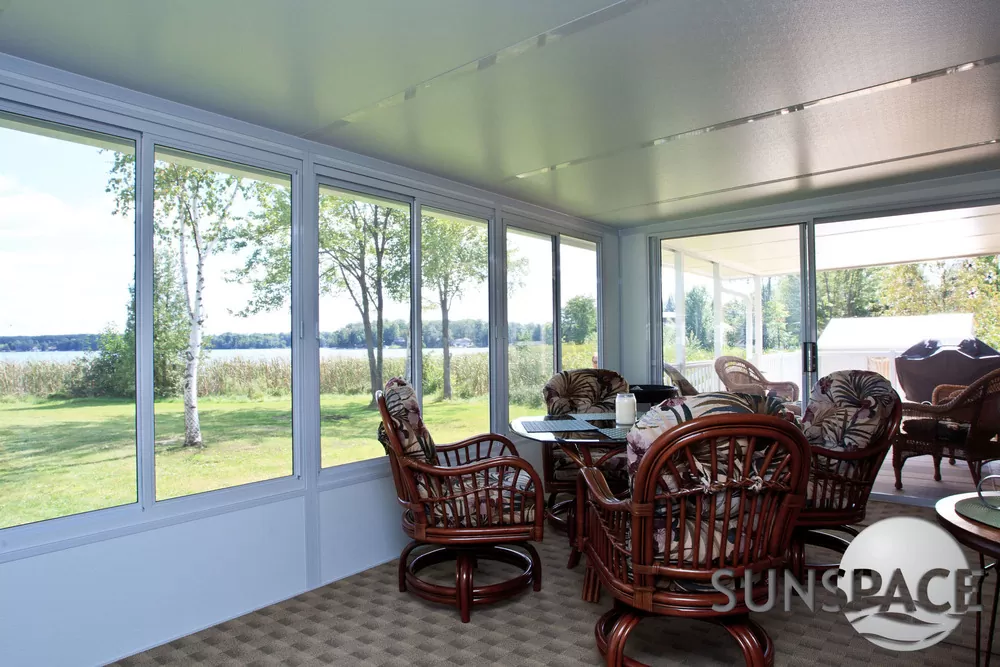
You’ve been enjoying your 3-season sunroom for a few years now. Spring mornings, summer evenings, fall afternoons. But then January hits the Jersey Shore, and that space goes cold and dark for months. So you start wondering: can I actually convert this into a year-round room without tearing it all down and starting over?
It’s one of the most common questions we hear from homeowners here. The short answer is: sometimes yes, but it depends heavily on what your current room is built from. As custom sunroom builders in Jersey Shore, we want to give you an honest, practical look at what this upgrade actually involves.
Thinking about making the leap to year-round comfort? Speak with one of our outdoor living specialists to get a clear picture of what’s possible for your specific space.
What’s the Real Difference Between a 3-Season and 4-Season Sunroom?
Before we talk about conversion, you need to know what separates these two types of rooms. The gap is bigger than most people expect.
A 3-season sunroom (like the Sunspace Model 300) uses 2″ extruded insulated aluminum pillars with single-glazed glass. It handles spring, summer, and fall comfortably. But it’s not sealed or insulated to hold conditioned air through a New Jersey winter.
A 4-season sunroom (like the Sunspace Model 400) is a different animal entirely. It features:
- High-density 3″ foam walls with commercial-grade thermal breaks
- Low-E Argon gas-filled glass for maximum heat retention
- Heavy-gauge 3″ aluminum extrusions built for wind and snow loads
- A fully insulated floor system (Theram-Deck)rated from R19 to R35
That’s not just an upgrade in materials. It’s a fundamentally different structural system.
So, Can You Actually Convert One?
Here’s the honest truth: in most cases, a true structural conversion from 3-season to 4-season isn’t as simple as swapping out windows or adding a space heater. Whether it’s feasible depends on three things.
1. The original frame and wall system
If your 3-season room was built with thin aluminum framing and single-pane glass panels, those components typically can’t be retrofitted with thicker insulated panels. The wall cavities, extrusion depths, and connection points are sized for a lighter build. Forcing heavier insulated panels into that framework creates gaps, air leaks, and structural stress.
2. The foundation and floor
A 4-season room needs a properly insulated floor. If your existing slab or deck foundation wasn’t built to handle thermal bridging, you’d need to address that too. Heat loss through an uninsulated floor is significant in a NJ winter.
3. The roof system
3-season roofs are typically built with thinner panels. A year-round room needs a roof system that meets higher R-value thresholds and can handle the full weight of snow and ice.
What Are Your Realistic Options?
If you’ve decided you want year-round use, here’s how most homeowners handle it.
Option 1: Rebuild the Sunroom from Scratch
For most 3-season rooms, the most cost-effective long-term path is replacing the existing structure entirely with a proper 4-season build. It sounds drastic, but it’s often less expensive than patching an underpowered structure with compromises. You also get a warranty-backed, code-compliant room built right the first time. This is what we see most often in Jersey Shore homes, where the original room was built by a general contractor rather than a sunroom specialist.
Option 2: Upgrade Key Components Where Possible
In some cases, particularly with certain modular sunroom systems, individual panels, windows, or doors can be swapped for higher-performance versions. This partial upgrade can meaningfully extend the usable season, even if it doesn’t fully get you to a true 4-season room. It’s worth evaluating if your existing structure is only a few years old.
Option 3: Add Heating and Cooling Without Structural Changes
Some homeowners add a ductless mini-split system to a 3-season room and use it year-round anyway. This can work in mild winters, but in full Jersey Shore cold snaps, an uninsulated sunroom will struggle. You’ll likely pay high energy bills and still feel drafts. It’s not a true solution, just a workaround.
What a Jersey Shore Conversion Assessment Looks Like
| Factor | 3-Season Room | 4-Season Requirement |
| Wall insulation | 2″ foam panels | 3″ high-density foam panels |
| Glass type | Single-glazed | Low-E Argon gas-filled |
| Frame depth | 2″ aluminum extrusions | 3″ heavy-gauge extrusions |
| Floor system | Standard deck/slab | Therma-Deck insulated system |
| HVAC integration | Not required | Required |
When our team visits a home for an assessment, we check all five of these factors before making any recommendations. If the existing frame matches a system we can upgrade modularly, we’ll say so. If it doesn’t, we’ll tell you that too.
Why Jersey Shore Homes Need to Think About This Carefully
The Jersey Shore climate is specific. You get humid summers, salt air, heavy Atlantic storms in fall, and cold winters with real snow load. A room that’s borderline in the Midwest may simply not hold up here. If you’re seriously considering a 3-season vs 4-season sunroom for your Jersey Shore property, cost is only part of the story. Structural suitability for this specific coastal climate matters just as much.
Salt air accelerates corrosion on cheaper aluminum systems. Thermal expansion and contraction across extreme seasonal swings stress joints and seals. That’s why the quality of the original materials matters so much when you’re deciding whether a conversion is worth attempting.
FAQ
Can I convert any 3-season sunroom to a 4-season room?
Not all 3-season rooms can be structurally converted. It depends on the original framing system, wall thickness, and foundation. A professional assessment is the only way to know for sure.
How much does it cost to upgrade a 3-season sunroom to a 4-season?
Costs vary widely depending on room size, existing materials, and what needs to be replaced. In many cases, a full rebuild is comparable in cost to a piecemeal upgrade and produces better results.
Do I need a permit for a sunroom conversion in New Jersey?
Yes, most structural changes and additions require local building permits in New Jersey. A licensed contractor will handle permit applications as part of the project.
Will adding heat to my 3-season room make it a 4-season room?
Adding a mini-split or space heater helps, but without proper wall insulation and sealed glazing, you’ll lose heat quickly and face high energy bills. True 4-season comfort requires the right building envelope, not just a heater.
How long does a sunroom rebuild or upgrade take?
Projects like these typically run in the 12 to 18-week range from order through completion, depending on scope, permitting, and seasonal scheduling.
Ready to Find Out What’s Possible for Your Home?
If you’re tired of losing access to your sunroom every winter, the best first step is an honest conversation with someone who knows these systems. Sunspace of the Jersey Shore has helped homeowners across the area figure out exactly what kind of upgrade makes sense for their specific home, budget, and goals. Reach out to schedule a no-pressure consultation and get real answers about your space.